
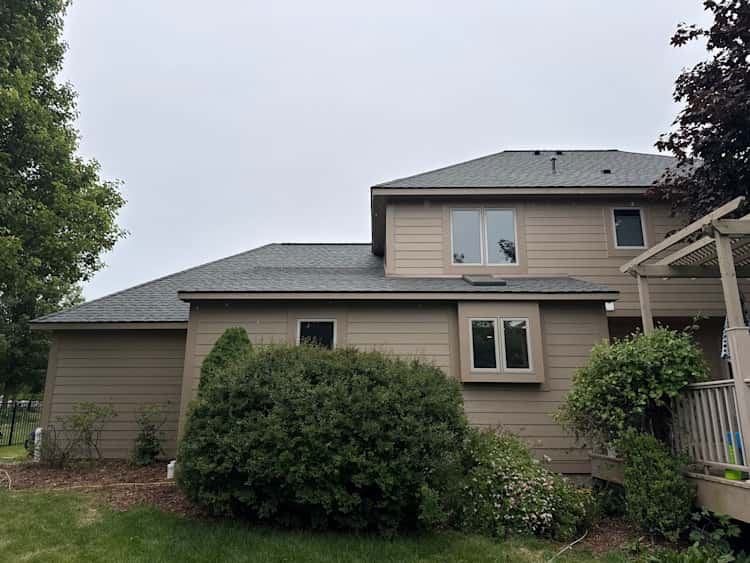
Hail is one of the sneakiest threats to a Michigan roof. A storm can pass in minutes and leave damage that is almost invisible from the ground but slowly shortens the life of the roof. Knowing what hail damage looks like, and how to check for it safely, helps you catch it before it turns into a leak. Here is what to watch for after a storm.
Why hail damage is easy to miss
Unlike a fallen branch or a wind-torn shingle, hail damage is often subtle. It shows up as small bruises and dents in the shingle surface and as knocked-off granules rather than obvious holes. From the driveway it can look like nothing happened. But each of those bruises is a spot where the shingle has lost its protective surface, and over time those spots crack, let in water, and age the roof early.
Signs of hail damage
Dark, bruised, or dented spots on the shingles where the granules have been knocked away.
A scattered, random pattern of marks rather than the straight lines of normal wear.
A buildup of granules in the gutters and at the base of downspouts after the storm.
Dents and dings on softer metal surfaces like gutters, downspouts, vents, and flashing.
Damage on other surfaces nearby, such as the AC unit, fence, or deck, which hints the roof took hits too.
How to check safely
Safety comes first, always. Do not climb onto a roof to hunt for hail damage, especially when it is wet. You can spot a lot from the ground with binoculars and by inspecting the metal surfaces you can reach, like the gutters and downspouts. Dents on that softer metal are one of the clearest signs that the shingles likely took hits too. Leave the close-up roof inspection to a professional with the right equipment and training.
Document everything
If you suspect hail damage, build a record while it is fresh. This protects you if you end up filing a claim:
Note the date and time of the storm.
Take dated photos of any dents you can safely see on gutters, vents, and other metal.
Photograph any hail-struck items around the yard.
Get a professional, photo-documented roof inspection to capture what you cannot see safely.
The insurance side
Most homeowners policies cover sudden hail damage, but the process rewards acting promptly and having good documentation. Many policies have deadlines, and damage left unaddressed only gets worse. The usual path is to report the claim, have the insurer send an adjuster, and have a qualified roofing contractor inspect and scope the work. Your own documented inspection helps make sure legitimate damage is not overlooked when the scope is written.
How a local contractor helps
After a storm, out-of-town crews tend to appear, knock on doors, and disappear once the work is done. A local, established contractor does more and stays accountable. We inspect and document the damage, help you understand the scope, and work with your adjuster so the job is done right. Being local means we are here long after the storm chasers have moved on to the next town.
Worried a storm may have hailed your roof? We provide free, photo-documented storm damage inspections and will help you navigate a claim. Reach out and we will take a look.