
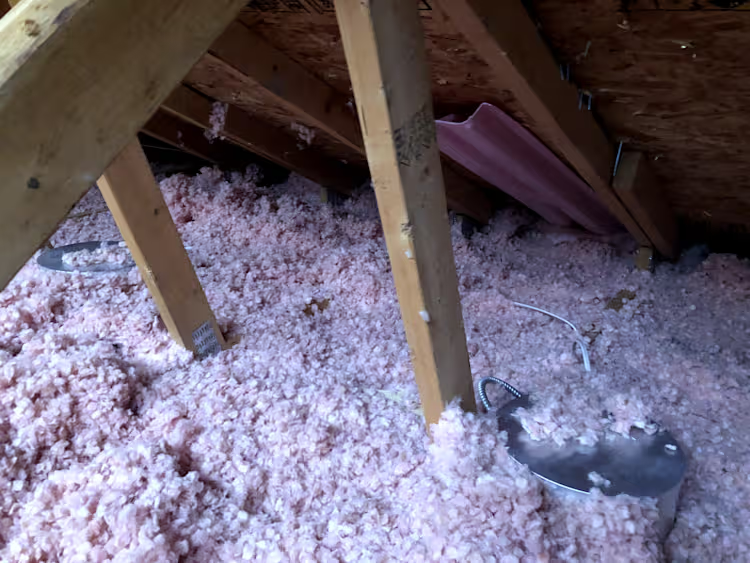
Your attic does more for your comfort than almost any other part of the house, and in a Michigan winter it works overtime. When the insulation and ventilation up there are doing their jobs, your home holds heat, your energy bills stay reasonable, and your roof sheds snow the way it should. When they are not, you get cold rooms, high bills, and ice dams along the eaves. Here is what every Michigan homeowner should understand about the attic system.
Why the attic matters so much here
Heat rises, and in winter your attic is the last line of defense between your heated living space and the freezing air above. A well insulated, well ventilated attic keeps warm air where you want it and keeps the roof deck cold and even in temperature. That balance is exactly what prevents the freeze and thaw cycle that creates ice dams.
Insulation: how much is enough
Insulation is measured in R-value, which describes how well it resists heat flow. Most of Michigan sits in a colder climate zone, and current energy code calls for roughly R-49 to R-60 in the attic. Many older homes were built to a much lower standard and have settled or thinned insulation that no longer performs. If you can see the tops of the floor joists in your attic, you are almost certainly under-insulated.
Ventilation: the other half of the system
Insulation alone is not enough. A roof needs balanced ventilation, which means intake vents low at the soffits and exhaust vents high at the ridge, so air moves continuously through the attic. That airflow carries away moisture and keeps the roof deck cold in winter and cooler in summer. Without it, attics trap humidity that leads to mold, rusted fasteners, and premature shingle wear.
The ice dam connection
Ice dams form when heat escaping into the attic melts snow on the upper roof, the water runs down to the cold eaves, and it refreezes into a ridge of ice. That ice traps more meltwater, which backs up under the shingles and into the home. The fix is rarely on the surface of the roof. It is air sealing, insulation, and ventilation working together to keep the roof deck cold and even.
Signs your attic needs attention
Rooms on the top floor that are always cold in winter or hot in summer.
Recurring icicles or ice ridges along the eaves.
Higher heating and cooling bills than you expect.
Visible daylight, moisture, frost, or mold in the attic.
Insulation that looks thin, uneven, or below the tops of the joists.
What a proper upgrade involves
A good insulation and ventilation upgrade is a system, not a single product. We start by air sealing the gaps and penetrations where warm air leaks into the attic, add insulation to the recommended level, install baffles so the soffit vents stay clear, and confirm the intake and exhaust are balanced. Done correctly, the whole attic works as one unit to protect the home.
The payoff
A balanced attic is one of the highest-value improvements you can make. It makes the home more comfortable room to room, lowers the load on your furnace and air conditioner, helps prevent ice dams and moisture damage, and extends the life of the roof above it. It is comfort and protection in one upgrade.
Wondering if your attic is holding you back? We will inspect your insulation and ventilation, show you what we find, and recommend the right improvements for your home. Reach out for a free, no pressure estimate.